Subtle Christian Clothing: A Buyer's Guide
Subtle Christian clothing is faith apparel that speaks quietly: a small mark, a symbol or a short reference instead of a full verse across the chest. Done well, it looks like premium everyday clothing first and starts conversations second. Here is how to find pieces that are actually subtle, actually well made and worth the money.
What "subtle" Christian clothing actually means
Subtle doesn't mean secret. It means the design leads with craftsmanship and lets the faith element sit in the details: a small chest mark, a sleeve detail, an inside print, a reference a believer would recognize. People who share your faith notice it. People who don't see a well-made shirt, until they ask.
That is the appeal for a lot of believers. You can wear it to the gym, the office or a family dinner without feeling like a walking billboard, and it still means something every time you put it on.
The subtlety scale: five levels from quiet to loud
Blank essentials with a small brand mark. The faith lives in the brand's mission, not on the garment. The quietest option.
A small symbol. A cross, a seed, a dove or a fish on the chest or sleeve. Recognizable to believers and easy to explain.
A short reference. A chapter and verse like "Col 3:23" or a single word. It invites the question "What does that mean?"
A short statement. A phrase in modest type on the chest or back. Clear, but still styled like everyday clothing.
A full verse or slogan. Large text that declares the message at a glance. The loudest option.
None of these levels is more faithful than another. Pick the one that fits where you'll wear it and how you want conversations to start. If you're wrestling with whether quiet means ashamed, we unpack that in Is It Okay to Wear Christian Clothing?
Is subtle the same as hiding your faith?
No. Hiding your faith is about what you do when following Jesus costs something. A small mark is about design and taste. The real witness is how you live, and a subtle piece often opens better conversations than a slogan, because people ask instead of assume.
Embroidery vs. print: what lasts
How the design is applied tells you a lot about how long a piece will look good.
Embroidery: thread stitched into the fabric. Durable, textured and premium-looking, especially for small marks. It won't crack or peel. The tradeoffs are cost, and large embroidered designs can feel stiff.
Screen printing: ink pressed through a screen. Durable and great for bold graphics when done well. Quality depends heavily on the ink and the printer.
Direct-to-garment (DTG): ink printed onto the fabric like a desktop printer. Common in print-on-demand. It can look sharp when new but tends to fade faster with washing.
Heat transfers and vinyl: a design pressed on with heat. Cheap and fast, but more likely to crack, peel or feel plasticky over time.
For subtle faith apparel, a small embroidered mark is hard to beat. It reads as quality from across the room and still looks right after dozens of washes.
Fabric weight, cut and the details that signal quality
Fabric weight is usually listed in GSM (grams per square meter). Higher numbers mean denser, heavier fabric. A rough guide:
Tees: under 150 GSM is lightweight, about 150 to 200 is midweight, and 200 and up is heavyweight.
Hoodies: under about 280 GSM is lightweight, roughly 280 to 350 is midweight, and 350 and up feels truly heavyweight.
Heavier isn't automatically better. A heavyweight tee drapes well and lasts; a lighter one breathes better in Florida heat. What matters is that the brand tells you the weight and the fiber, so you can choose.
Other quality signals worth checking:
Fiber: combed or ring-spun cotton feels softer than basic cotton. Performance pieces use synthetic blends with stretch and quick-dry properties.
Collar and cuffs: ribbing that snaps back instead of rippling after a few washes.
Stitching: clean, even hems and reinforced stress points.
Preshrunk or garment-washed: fewer shrinkage surprises and a broken-in feel from day one.
Fit: shoulders that sit right, sleeves that don't flare and a length that works tucked or untucked.
What to expect to pay, and why
Price tracks fabric, construction and how the design is applied. In our 2026 scan of faith-based apparel brands, premium tees generally ran about $25 to $50 and hoodies about $60 to $100, while print-on-demand marketplace shirts often sell for less. The difference usually shows up in fabric weight, durability and how the design survives the wash.
A fair question for any piece: will this still look good after a year of real use? If yes, the cost per wear is usually lower than the cheaper shirt you replace twice.
How to wear it: gym, coffee, Sunday
The gym: performance fabric, a small chest or sleeve mark, and colors that hide sweat like black, olive or heather. Keep the message small and let your conduct do the talking.
Coffee and errands: a heavyweight tee or hoodie in a neutral tone with a minimal mark. It pairs with jeans, joggers or shorts.
Sunday: a clean, well-fitted tee under an overshirt, or a crisp hoodie in cream or black. Subtle pieces dress up better than loud graphics.
Neutrals make the system work. Black, cream, olive and tan mix with almost everything and keep the focus on fit and quality.
Questions to ask any faith-based brand
What is the fabric weight and fiber content?
Is the design embroidered or printed, and how?
Where is it made, and by whom?
Is it preshrunk, and how does it wash?
What is the return policy if the fit is off?
What does the brand do beyond selling shirts?
A brand that answers these clearly has usually thought about stewardship, not just slogans.
A word of perspective
"And why do you worry about clothes? Consider how the lilies of the field grow: They do not labor or spin. Yet I tell you that not even Solomon in all his glory was adorned like one of these." (Matthew 6:28-29, BSB)
Good clothing is a gift, not a goal. Buy fewer, better pieces, wear them with gratitude, and keep the bigger wardrobe in view: compassion, kindness, humility, gentleness and patience (Colossians 3:12).
The Foundation Collection: get first access
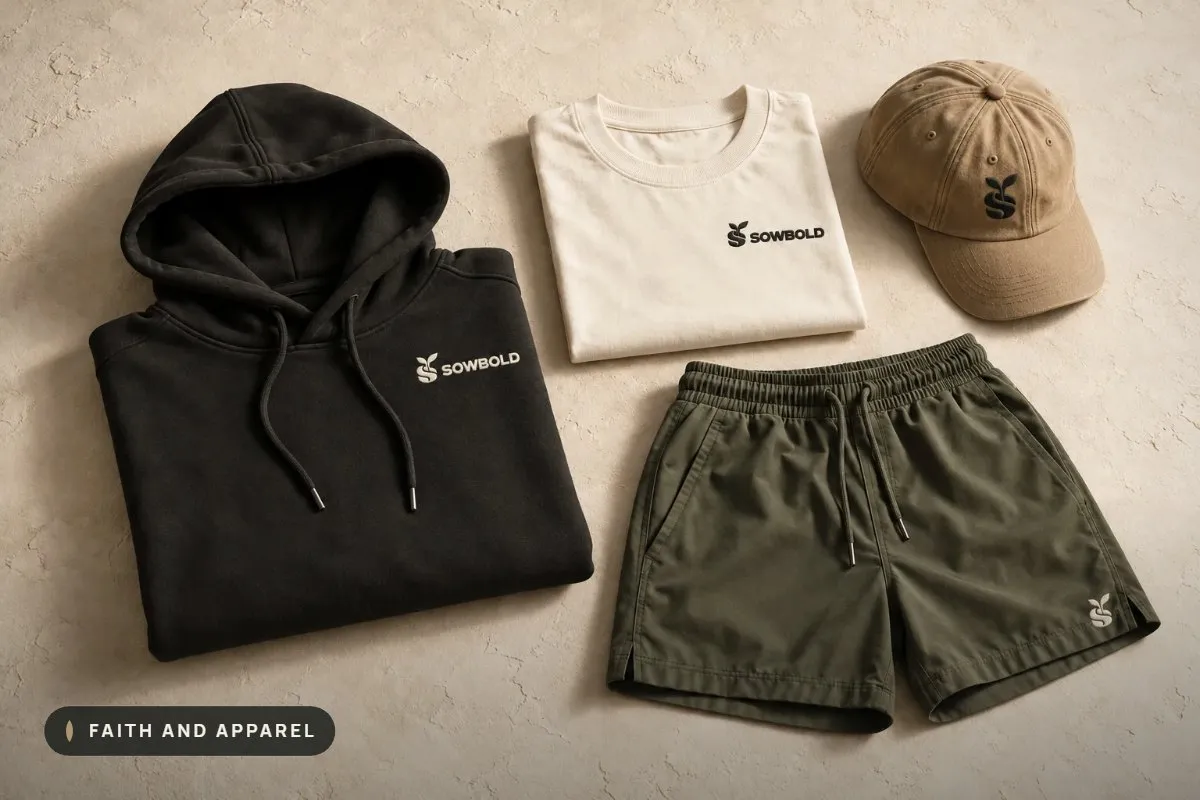
SowBold Goods is building exactly this kind of clothing: premium athletic and everyday essentials with a small SowBold mark instead of a slogan. The Foundation Collection starts with four pieces: an essential tee, a heavyweight hoodie, a performance short and a cap. We'll publish full fabric and construction details at launch.
"And whatsoever ye do, do it heartily, as to the Lord, and not unto men." (Colossians 3:23, KJV)
Join The Field for first access, plus one letter a week with a scripture reflection and a practical challenge.
FAQ
What makes Christian clothing subtle?
A small faith element, like a mark, symbol or short reference, on a garment that looks like premium everyday clothing first. The message is there for those who look, without a full verse printed across the chest.
Are there Christian clothing brands that don't look preachy?
Yes. A growing number of faith-based brands focus on minimal design, neutral colors and quality basics. Look for small marks or symbols, clear fabric specs and embroidery rather than large prints.
What should I look for in quality Christian apparel?
Fabric weight and fiber, how the design is applied (embroidery lasts longest), stitching, collar recovery and whether the brand is open about where and how its clothing is made.
Can Christian clothing be stylish?
Absolutely. Subtle faith apparel follows the same rules as any good wardrobe: neutral colors, good fit, quality fabric and restrained details.
Is embroidered or printed Christian clothing better?
For small marks, embroidery is usually more durable and looks more premium. For large graphics, a quality screen print can last for years. Cheap transfers tend to fade or crack sooner.
